



LIGHT PLUS
Properties:
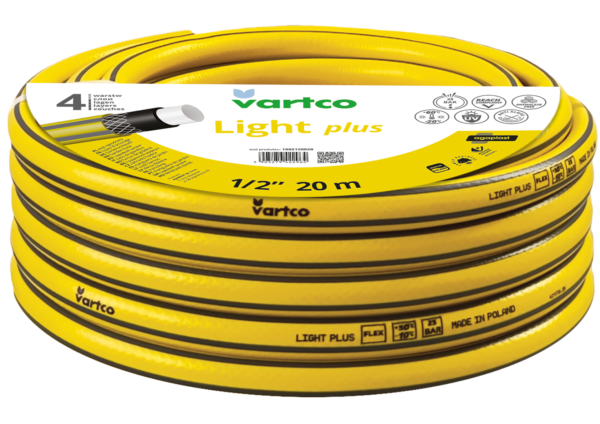
- Lightweight and durable 4-layer garden hose
- Chemically safe: manufactured from materials meeting EU chemical standards
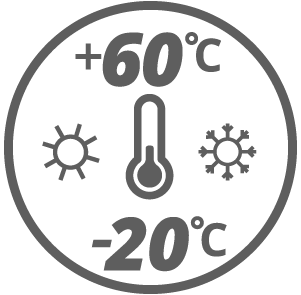
- Multi-season, resistant to temperatures -20/+60°C and UV radiation
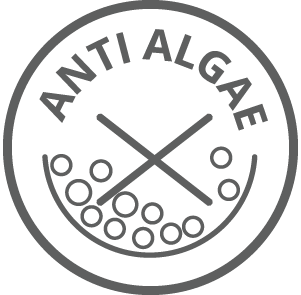
- Inner layer resistant to algae buildup
- Designed and manufactured in Poland
Category: Garden hoses
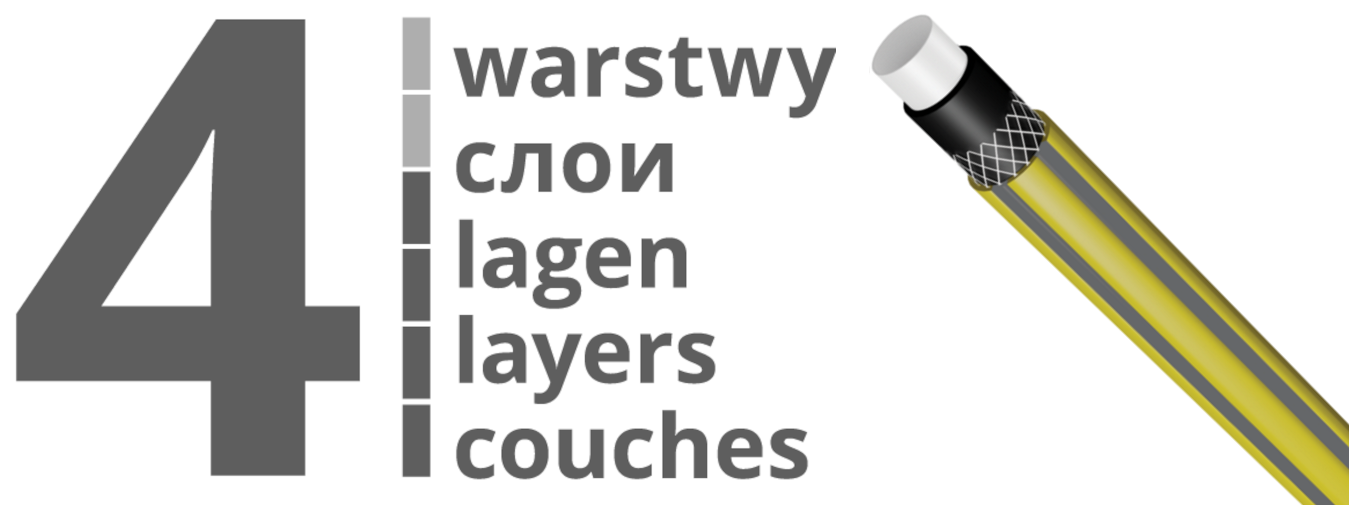
| Construction | 4-layer: (I) white inner layer permanently bonded with (II) black flexible PVC layer (III) cross braid reinforcement made of high-quality polyester yarn (IV) opaque coating |
| Working pressure | 8 bar |
| Burst pressure | 25 bar |
| Temperature range | -20°C/60°C |
| Available lengths | 20 m, 30 m, 50 m, 100 m |
| Available diameters | 1/2″, 3/4″, 1″ |
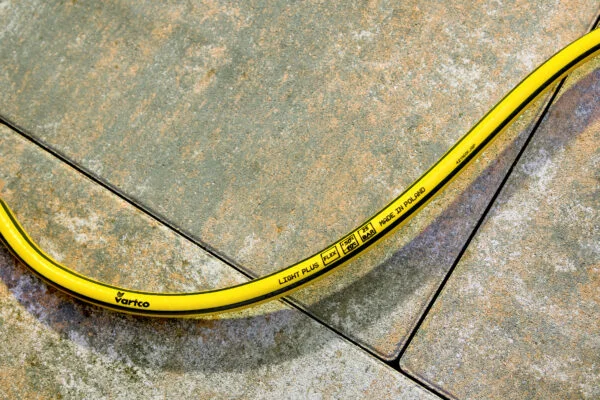
| Color | Yellow with two graphite stripes |
| Warranty | 2 years |
| Compliance with regulations | Free of toxic substances and heavy metals – compliant with RoHS and REACH regulations |








Logistics table / Buy from our partners
| Product code | Size | Length[m] | EAN code | Buy from our partners |
|---|---|---|---|---|
| 1002120020 | 1/2″ – 12,5mm | 20 | 5905279422964 |  |
| 1002120030 | 1/2″ – 12,5mm | 30 | 5905279422971 | |
| 1002120050 | 1/2″ – 12,5mm | 50 | 5905279422988 | |
| 1002120100 | 1/2″ – 12,5mm | 100 | 5903268095984 | |
| 1002340020 | 3/4″ – 19mm | 20 | 5905279422995 | |
| 1002340030 | 3/4″ – 19mm | 30 | 5903268095847 | |
| 1002340050 | 3/4″ – 19mm | 50 | 5903268095854 | |
| 1002340100 | 3/4″ – 19mm | 100 | 5903268095977 | |
| 1002100020 | 1″ – 25,4mm | 20 | 5905279422933 | |
| 1002100030 | 1″ – 25,4mm | 30 | 5905279422940 | |
| 1002100050 | 1″ – 25,4mm | 50 | 5905279422957 | |
Selection, storage, and operation rules
GENERAL INFORMATION
The storage and use of plastic hoses have a significant impact on their lifespan. The physical properties of plastics change throughout the entire period of the hose’s operation. These changes usually occur over time but can accelerate if the hose is exposed to prolonged sunlight, mechanical impacts, or improper storage (e.g., storing heavily twisted or kinked hoses).
HOSE SELECTION RULES
Optimal hose performance can be achieved by using appropriate accessories and, above all, by selecting a hose suited to the external and internal conditions in which it will operate. When analyzing the actual working conditions, choose the right diameter, type, and quality of the hose. Before purchasing, determine the parameters related to the type of media to be transferred through the hose. Applying the following rules will help optimize your choice:
- determine what material or media you want to transfer;
- verify the connections and their compatibility with the diameters;
- establish the exact size and required length of the hose;
- remember never to exceed the recommended working pressures.
STORAGE
The optimal storage temperature for plastic hoses is between 10°C and 25°C. Storing hoses in temperatures above 40°C is not recommended. It is also important to note that low temperatures, especially those below 0°C, negatively affect the durability and flexibility of the plastic. We recommend avoiding storing hoses in the direct vicinity of heat sources. Hoses that do not have a special purpose should not be used or stored with chemically active substances such as solvents, acids, disinfectants, as well as oils, greases, or fuels. The storage period of hoses should be kept as short as possible. During this time, ensure that the air humidity in the room does not exceed 65%. Hoses should be stored without tension, compression, or other factors causing deformation. Pay special attention during transport to avoid mechanical damage. Garden hoses should also be protected against rodents and stored in a way that prevents dogs, cats, or other pets from playing with them.
OPERATION
When opening the packaging, be careful not to damage the hose coating with a sharp tool. Before each use, visually inspect the hose, paying special attention to whether it is clear at the ends, hasn’t been cut, and has no other mechanical damage. Hoses must only be used for their intended purpose. Do not exceed the working pressures specified for each type of hose. It is also important that the transferred media have the recommended temperature, which should not be exceeded. During use, avoid kinking, twisting, and tangling the hose structure. Excessive loads caused by twisting or tangling lead to permanent structural changes, which may result in a loss of performance properties and, ultimately, hose rupture. For “fixed” installations, ensure the hose has freedom of movement during pressure changes. For “mobile” installations, make sure the hose does not rub excessively against sharp objects or wall edges. We recommend not keeping hoses under pressure during storage unless necessary. Hoses working under pressure require special attention and adherence to safety rules.
MAINTENANCE
The frequency of maintenance should depend on how often the hose is used. During inspection, check the correctness of connections and verify that there are no visible cracks, deformations, or irregularities on the hose structure. The appearance of blisters, local bulges, or deformations under pressure means the hose must be immediately replaced with a new one. We do not recommend repairing damaged hoses. If only the ends are damaged, you can cut them off and refit the connection.